Water
How Much Water Should You Store for an Emergency?
July 5, 2026 · 3min read · Reviewed against FEMA & CDC guidance
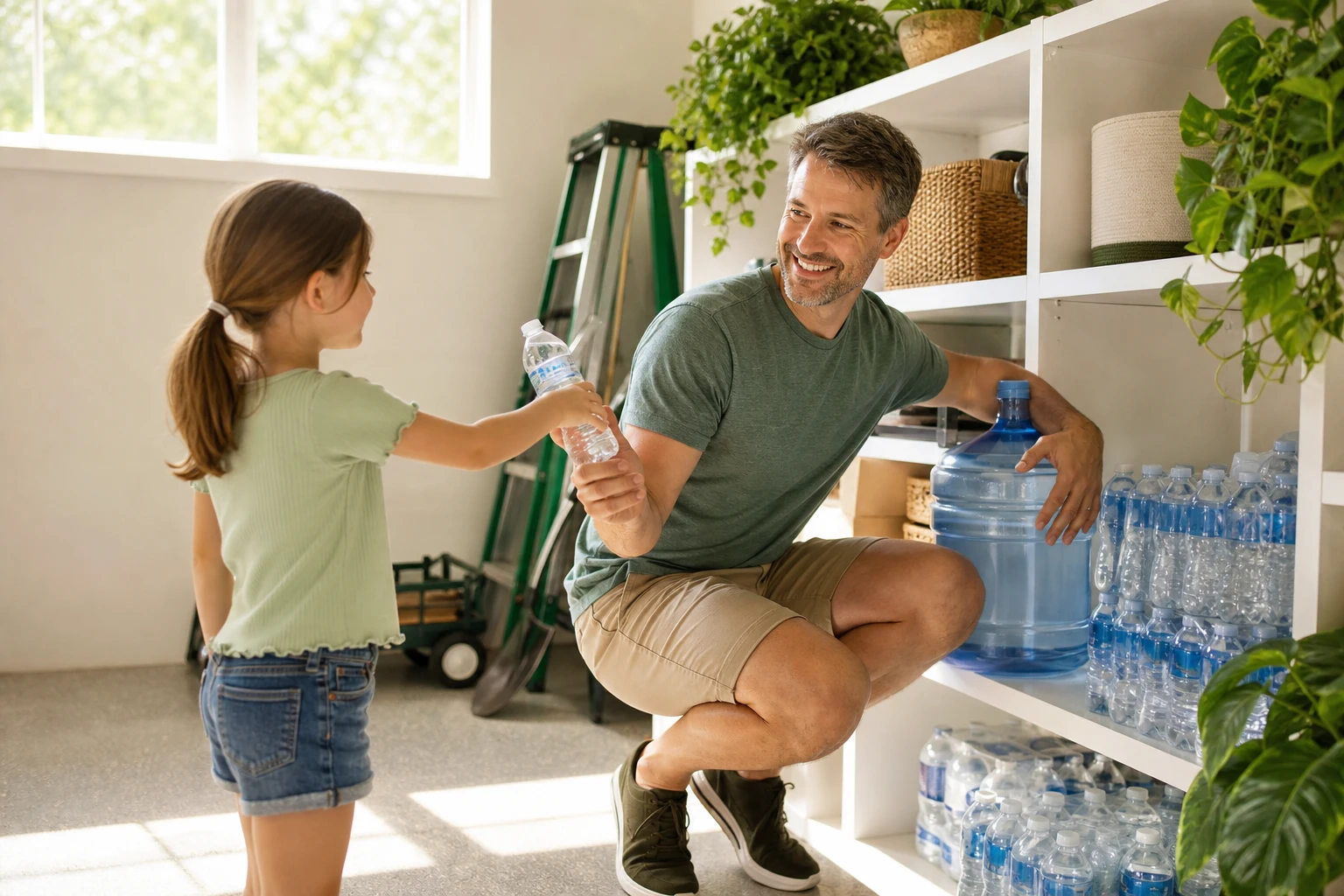
Here is the number everyone agrees on: 1 gallon of water per person, per day. Half for drinking, half for cooking and basic hygiene. The CDC and FEMA both use it, and it holds up in real emergencies.
The disagreement is duration. FEMA's floor is 3 days. The CDC recommends working toward 2 weeks, because real water outages, boil notices, and storm recoveries routinely outlast a long weekend. Here is what that means for your household:
| Household | 3 days | 2 weeks |
|---|---|---|
| 1 person | 3 gallons | 14 gallons |
| 2 people | 6 gallons | 28 gallons |
| Family of 4 | 12 gallons | 56 gallons |
Add more for anyone pregnant or nursing, anyone sick, pets (roughly a gallon per day for a large dog), and hot climates, where needs can double.
What 56 gallons actually looks like
This is where most people quietly give up, so let's make it concrete. For a family of four, two weeks of water is any mix of:
- Eleven 5-gallon jugs (the blue stackable kind), or
- Ten cases of bottled water plus about 32 gallons in larger containers, or
- One 55-gallon barrel plus a case of bottles for grab-and-go
Most families do best with a mix: bottled water for drinking (zero effort, long shelf life, portable) and larger containers for cooking and washing.
Containers that are safe, and ones that aren't
Good: commercially bottled water, food-grade water storage containers (look for HDPE plastic marked food-safe), and water storage barrels with a pump.
Bad: old milk jugs and juice bottles. The plastic degrades, the residue feeds bacteria, and they crack along the seams within months. This is the most common water storage mistake there is.
If you fill containers from the tap, replace the water every 6 months. Municipal tap water is already treated, so you don't need to add anything for short-term storage.
The hidden 40 gallons already in your house
Two sources people forget:
- Your water heater holds 30 to 50 gallons of usable water. Learn where the drain valve is before you need it.
- A bathtub liner (sold as a one-time emergency bladder) holds up to 100 gallons and fills in minutes when a storm is coming. For hurricane country, it's one of the highest-value items you can own. More on that in our hurricane season guide.
If you run out: making water safe
If the taps are off and your stored water is gone:
- Boiling is the gold standard: a rolling boil for 1 minute kills pathogens.
- Unscented household bleach works when boiling isn't possible: 8 drops per gallon of clear water, stir, and wait 30 minutes. It should smell faintly of chlorine; if not, repeat once.
Knowing your number beats guessing it
Water is the least forgiving supply category: you can stretch food for weeks, but three days without water is an emergency inside the emergency. The math above is simple, but it changes every time your household does, and most families have no idea how many days their current stash actually covers.
That's what Provision Planner does. Tell it who's in your household, log your water along with your food, and it shows you a running answer: how many days you're covered for, right now, and what to add next. When the two-week goal is met, you'll know it, instead of hoping.
You did the reading. Now get your number.
Provision Planner does this article's math for your real household, automatically, and keeps it current as supplies come and go.