Food Storage
Mylar Bags for Food Storage: The Beginner's Walkthrough
June 14, 2026 · 2min read · Reviewed against FEMA & CDC guidance
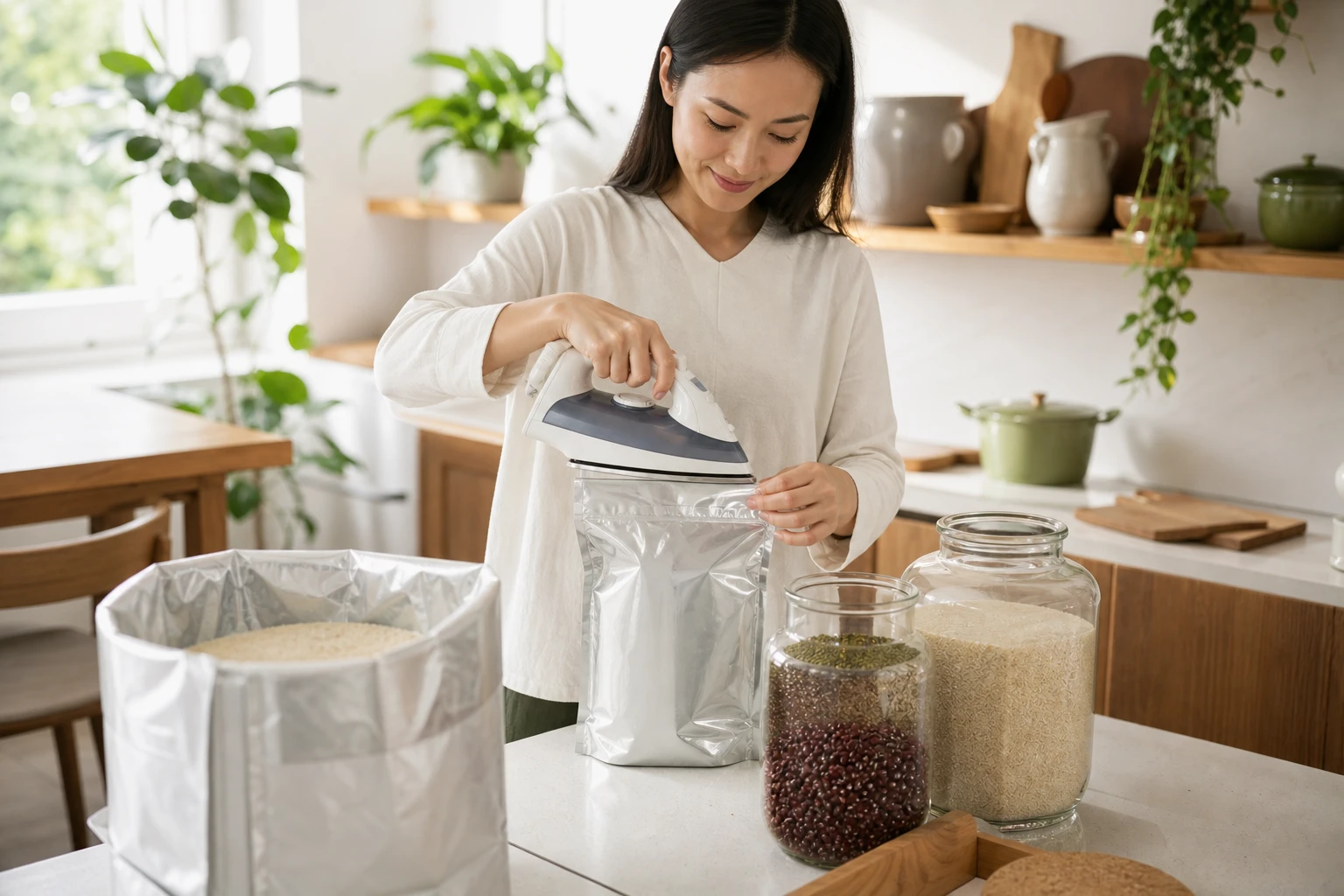
Mylar bags are the difference between rice that lasts 5 years and rice that lasts 30. The technique looks industrial and intimidating from the outside; in practice it's a clothes iron, a foil bag, and twenty minutes. Here's the whole walkthrough.
Why mylar works
Food is aged by four enemies: oxygen, light, moisture, and heat. A mylar bag is an aluminum-layered pouch that blocks the first two completely, and the oxygen absorber you drop inside removes the oxygen that's sealed in with the food. What's left is food resting in inert nitrogen, in the dark, aging at a crawl. Handle moisture by storing only dry foods, and heat by choosing a cool spot.
What you need (about $40 to start)
- Mylar bags, 5+ mil thickness. One-gallon bags are the beginner sweet spot; 5-gallon bags line full buckets. Thin 3-mil bags puncture, so spend the extra dollar.
- Oxygen absorbers: 300 to 500cc per one-gallon bag, 2,000 to 2,500cc per 5-gallon bag. More than needed is fine; less is failure.
- A clothes iron (or hair straightener, honestly easier).
- Food-grade buckets if going big: mylar blocks oxygen, the bucket blocks rodents and drops.
The process
- Fill the bag, leaving 3 to 4 inches of headroom.
- Drop the oxygen absorbers on top. Work briskly from here: absorbers start working the moment their package opens, so keep spares in a sealed jar.
- Iron the seal: press the opening between the iron (wool setting) and a level, leaving a 2-inch gap.
- Press out the extra air through the gap, then iron the gap shut.
- Label with contents and date (masking tape and marker), because every silver bag looks identical in February.
- Within a day or two the bag should tighten and look slightly vacuum-hugged as the absorber finishes. A brick-hard bag of rice is the look of success.
What to store in mylar (and what never)
Yes: white rice, dried beans, rolled oats, pasta, flour, sugar-free dry staples. The full candidate list is in foods that last 25 years.
No: brown rice and nuts (their oils go rancid regardless, see how long rice lasts), sugar and salt (they don't need absorbers and turn into bricks with them), and anything moist, ever. Moisture plus sealed bag is how you grow something dangerous.
The three mistakes that ruin bags
- Slow packing days. Absorbers exhausted on countertop air have nothing left for the bag.
- Weak seals. Test by pressing the bag the next day; hissing means re-iron.
- Hot storage. A garage that hits 100°F in July cuts decades off the math. Cool, dark, dry, always.
Sealed is not the same as accounted for
A stack of identical silver bags is exactly where home inventories go to die. When you finish a packing session, log it in Provision Planner: what's in each bucket, how much, and when it was sealed. The app adds it to your household's coverage number, so five buckets in the basement stop being a mystery and become "31 more days for the four of us," visible any time.
You did the reading. Now get your number.
Provision Planner does this article's math for your real household, automatically, and keeps it current as supplies come and go.