Food Storage
How Long Does Canned Food Actually Last? (It's Not the Date on the Can)
July 2, 2026 · 2min read · Reviewed against FEMA & CDC guidance
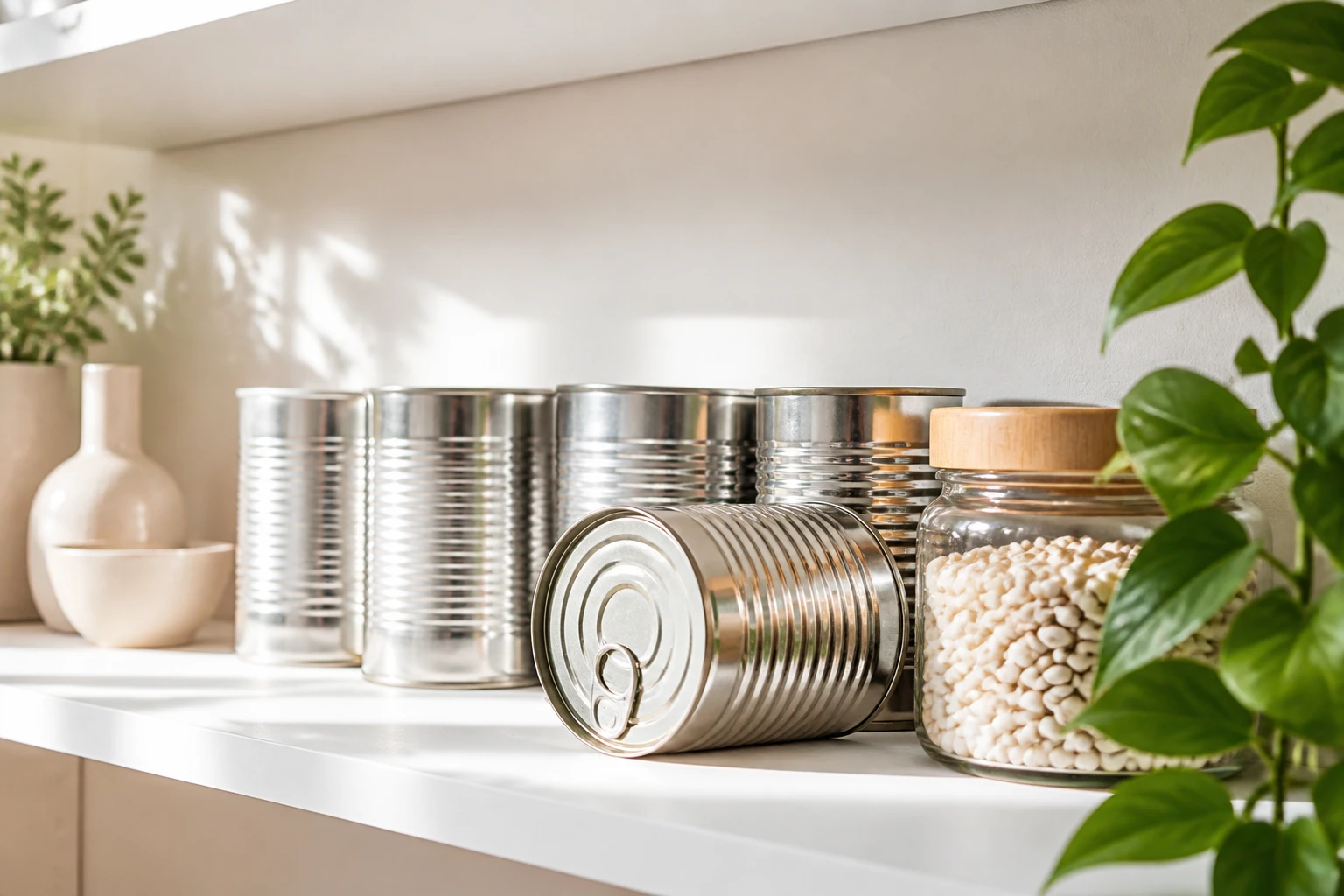
The date printed on a can is not an expiration date. It's a "best by" date, and it's about peak flavor and texture, not safety. That one fact changes how you think about your whole pantry, so let's get the real numbers on the table.
How long canned food really keeps
Per USDA guidance, an intact, properly stored can is safe long after its printed date. Quality is what declines:
| Type | Best quality for | Examples |
|---|---|---|
| High-acid | 12 to 18 months | Tomatoes, citrus, pineapple, most fruit |
| Low-acid | 2 to 5 years | Beans, vegetables, meats, soups, stews |
After those windows, the food inside slowly loses color, texture, and nutrition, but an undamaged can doesn't suddenly become dangerous on a printed date. Plenty of families have eaten 6-year-old canned beans and noticed nothing but slightly softer beans.
"Properly stored" is doing real work in that sentence: it means cool and dry, ideally below 85°F. A can that spends summers in a hot garage ages several times faster than one in a basement pantry.
The three signs a can goes in the trash
Safety problems announce themselves on the can, not the calendar. Discard, without tasting, any can that is:
- Bulging or swollen on the ends. Gas pressure inside means bacterial growth, and it's the classic warning sign for botulism.
- Leaking, badly dented on a seam, or spurting liquid when opened. The seal is the entire safety system; a compromised seam voids it.
- Rusted through (a stain you can wipe off is cosmetic; pitting or flaking rust that catches a fingernail is not).
The rule that covers everything: when in doubt, throw it out. Never taste-test a suspect can. Botulism toxin has no taste or smell, and the amount on a doubted spoonful is not a risk worth a can of beans.
Rotation beats archaeology
The real cost of dated cans isn't danger, it's waste. Cans bought and forgotten become cans discarded years later on principle, which is money in the trash. Two habits fix it:
- First in, first out. New cans go in the back, oldest come forward. A $10 can organizer does this automatically.
- Cook from your storage. If your emergency food is the same food you eat, rotation happens by itself. That's the core idea behind our whole 2-week supply list.
Or let the tracking happen automatically
The honest problem with rotation advice: it depends on you remembering. Nobody remembers 60 cans.
This is one of the most-used features in Provision Planner: scan a can's barcode as you shelve it, set the date once, and the app quietly tracks everything, then tells you what's approaching its window so it gets eaten, not tossed. Your food storage stays fresh, your grocery money stops leaking, and you always know exactly how many days your pantry covers.
You did the reading. Now get your number.
Provision Planner does this article's math for your real household, automatically, and keeps it current as supplies come and go.