Food Storage
Long-Term Food Storage for Beginners: What Lasts 25 Years (and What Doesn't)
July 3, 2026 · 2min read · Reviewed against FEMA & CDC guidance
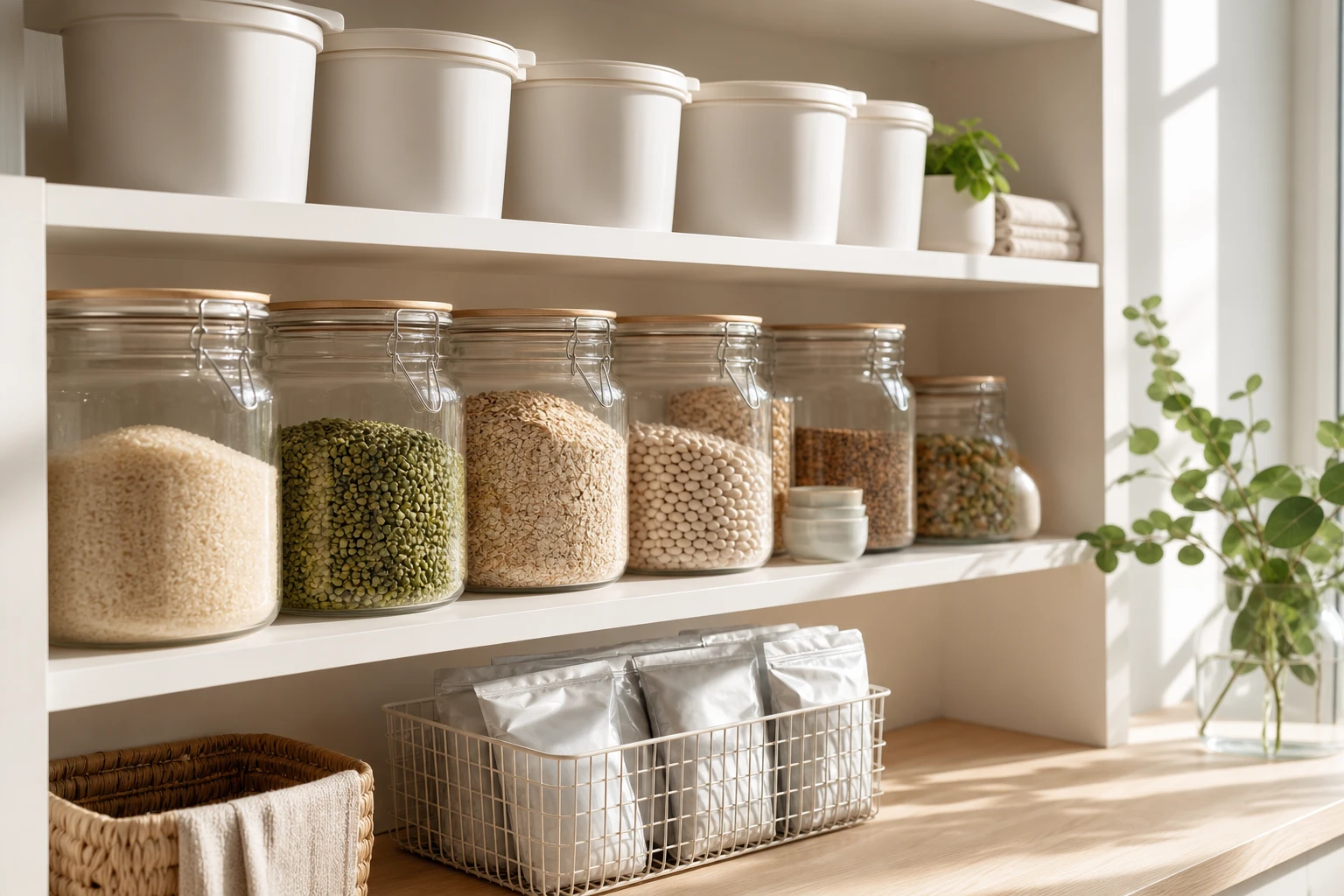
There are two completely different games in food storage. The two-week pantry (covered in our 2-week supply list) is about riding out storms and outages. Long-term storage is about food measured in decades, and it follows different rules.
The good news for beginners: the foods that last longest are also the cheapest in the store.
The 25-year club
Stored properly (cool, dark, dry, and sealed away from oxygen), these keep 25 to 30 years:
| Food | Shelf life (sealed) | Notes |
|---|---|---|
| White rice | 25 to 30 years | Brown rice does NOT: its oils go rancid in months |
| Dried beans | 25 to 30 years | Get harder with age; pressure cooking revives them |
| Rolled oats | 25 to 30 years | Cheapest calories in the club |
| Wheat berries | 30+ years | Needs a grain mill to be useful |
| Pasta | 20 to 30 years | Sealed, away from light |
| Sugar, salt, honey | Indefinite | Honey crystallizes; warm water fixes it |
The quiet failures
These are the items that surprise people by NOT lasting:
- Cooking oil: 1 to 2 years. The shortest-lived essential in your storage, and one of the most important. Buy small bottles and rotate them; don't stockpile a decade of oil.
- Brown rice, whole grains with oils intact: under a year.
- Anything in its original paper or thin plastic packaging. Flour bags and pasta boxes are moth and moisture magnets. The food can last decades; the packaging can't.
The mylar-and-bucket method, demystified
The standard technique sounds industrial but is genuinely beginner-friendly:
- Line a food-grade 5-gallon bucket with a mylar bag (a thick foil pouch).
- Fill it with one food type: rice, beans, oats.
- Drop in oxygen absorbers (small packets that pull the oxygen out; oxygen is what ages food and feeds insects).
- Seal the mylar with a clothes iron across the top, then snap the lid on.
That's it. A sealed bucket of white rice is roughly 35,000 calories that will outlast your mortgage. A weekend and a few hundred dollars builds a base most preppers took years to assemble.
Where to put it
Heat is the enemy: shelf life estimates assume around 70°F or cooler. A basement corner beats a garage that hits 100°F every summer, which can cut shelf life in half. Keep buckets off concrete floors (a scrap of plywood works), away from sunlight, and where you can actually reach them.
The part beginners skip: knowing what you have
Here's the trap. Long-term storage feels finished the day you seal the buckets, and then it disappears from your mind. Two years later you can't remember if you have three buckets of rice or five, whether the oil is from last spring or three springs ago, and what your family's real coverage adds up to.
Provision Planner was built for exactly this: log the buckets, jars, and cans once (the barcode scanner makes the canned goods fast), and it keeps a permanent inventory with expiration tracking and a live answer to the only question that matters: how many days could my household last on what's downstairs right now?
You did the reading. Now get your number.
Provision Planner does this article's math for your real household, automatically, and keeps it current as supplies come and go.