Scenarios
Power Outage Food Safety: What to Keep, What to Toss, and When
June 27, 2026 · 2min read · Reviewed against FEMA & CDC guidance
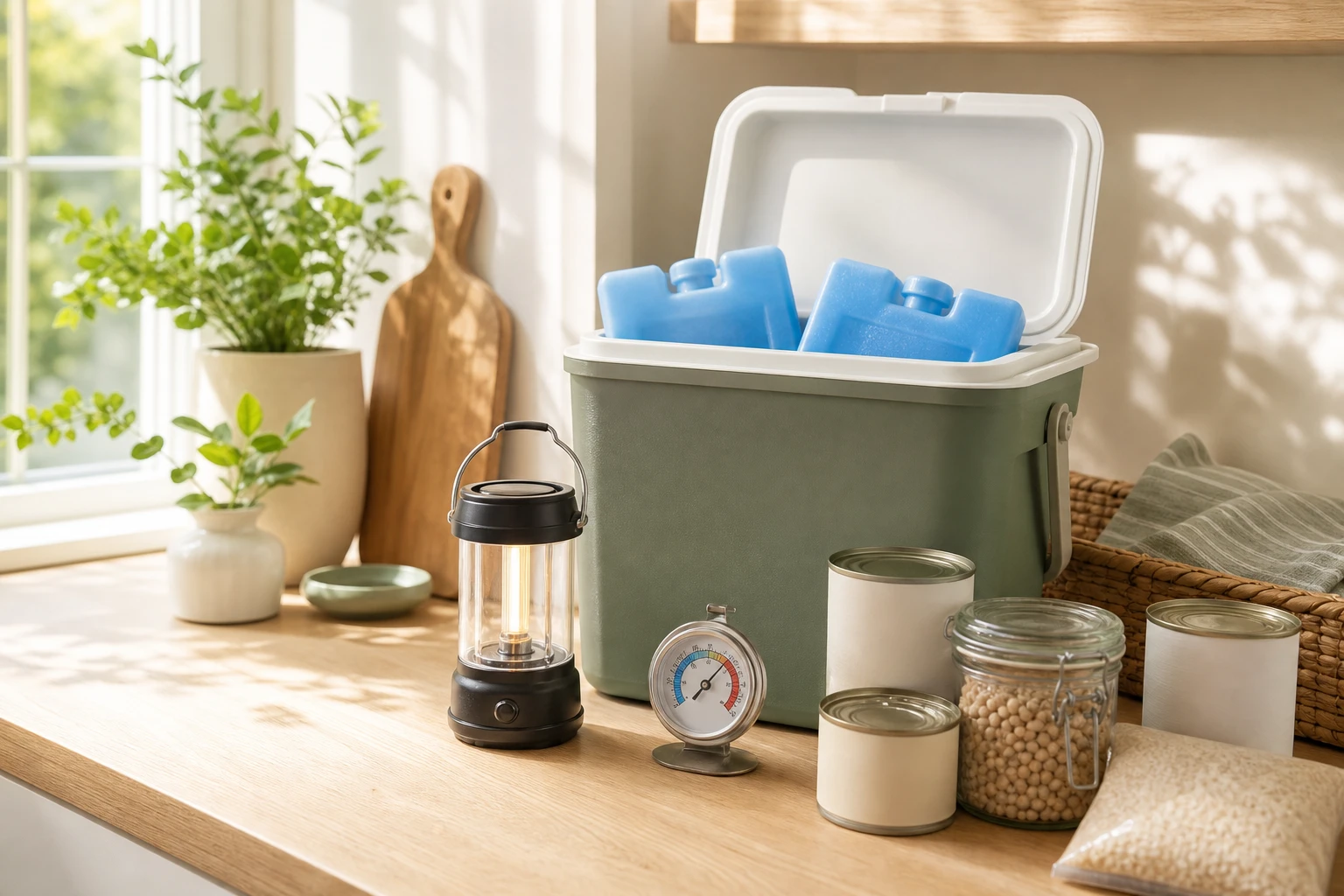
The power just went out. The first food decision you make is the biggest one: stop opening the doors. Everything below assumes you mostly did.
The timelines that matter
Per USDA guidance:
- Refrigerator: 4 hours. Unopened, a fridge holds safe temperatures for about four hours. After that, perishables (meat, dairy, eggs, leftovers, cut produce) that have spent more than 2 hours above 40°F need to go.
- Full freezer: 48 hours. Half-full freezer: 24 hours. Unopened, a packed freezer is a giant ice block that defends itself. Food that still has ice crystals or reads 40°F or below can be safely refrigerated or refrozen.
| Outage length | Fridge | Freezer (full) |
|---|---|---|
| Under 4 hours | Fine, keep doors shut | Fine |
| 4 to 24 hours | Perishables at risk; use cooler + ice | Fine if unopened |
| 24 to 48 hours | Toss perishables | Check for ice crystals |
| 48+ hours | Toss perishables | Toss anything thawed and warm |
What survives a long outage at room temperature
More than people think: unopened condiments and most sauces, hard cheeses, butter for a day or two, bread, whole fruits and vegetables, peanut butter, and everything in your canned and dry storage. This is exactly why the 2-week shelf-stable supply exists: it's the food that doesn't care about the grid.
The rules that prevent a bad week
- Never taste food to decide. Bacteria that cause food poisoning don't announce themselves in flavor or smell. When in doubt, throw it out.
- Use a thermometer, not a guess. An appliance thermometer in the fridge and freezer turns "I think it's fine" into a reading. 40°F is the line.
- 2 hours is the perishable clock. Any perishable above 40°F for more than 2 hours is done, whether that happens during an outage or on a countertop.
Tricks that buy hours
- Freeze water bottles and bags now. A fuller freezer lasts longer, and the ice becomes drinking water. (This is a standard hurricane-watch move.)
- Group frozen food together so it insulates itself.
- Move perishables to a cooler with ice at hour 3 of the fridge window, not hour 7.
- Know where to buy dry ice before you need it: 50 pounds holds a full freezer for two days.
The insurance policy is upstream
Food safety rules decide what you lose. What you have left afterward is decided months earlier, by the shelf-stable storage that never needed the fridge. Provision Planner tracks that layer: your canned goods, dry staples, and water, with expiration dates handled and a live count of how many days your household can run with the power off. The outage stops being a food crisis and becomes an inconvenience.
You did the reading. Now get your number.
Provision Planner does this article's math for your real household, automatically, and keeps it current as supplies come and go.