Readiness
How to Build a 72-Hour Kit (Without Buying a Prepackaged One)
June 29, 2026 · 2min read · Reviewed against FEMA & CDC guidance
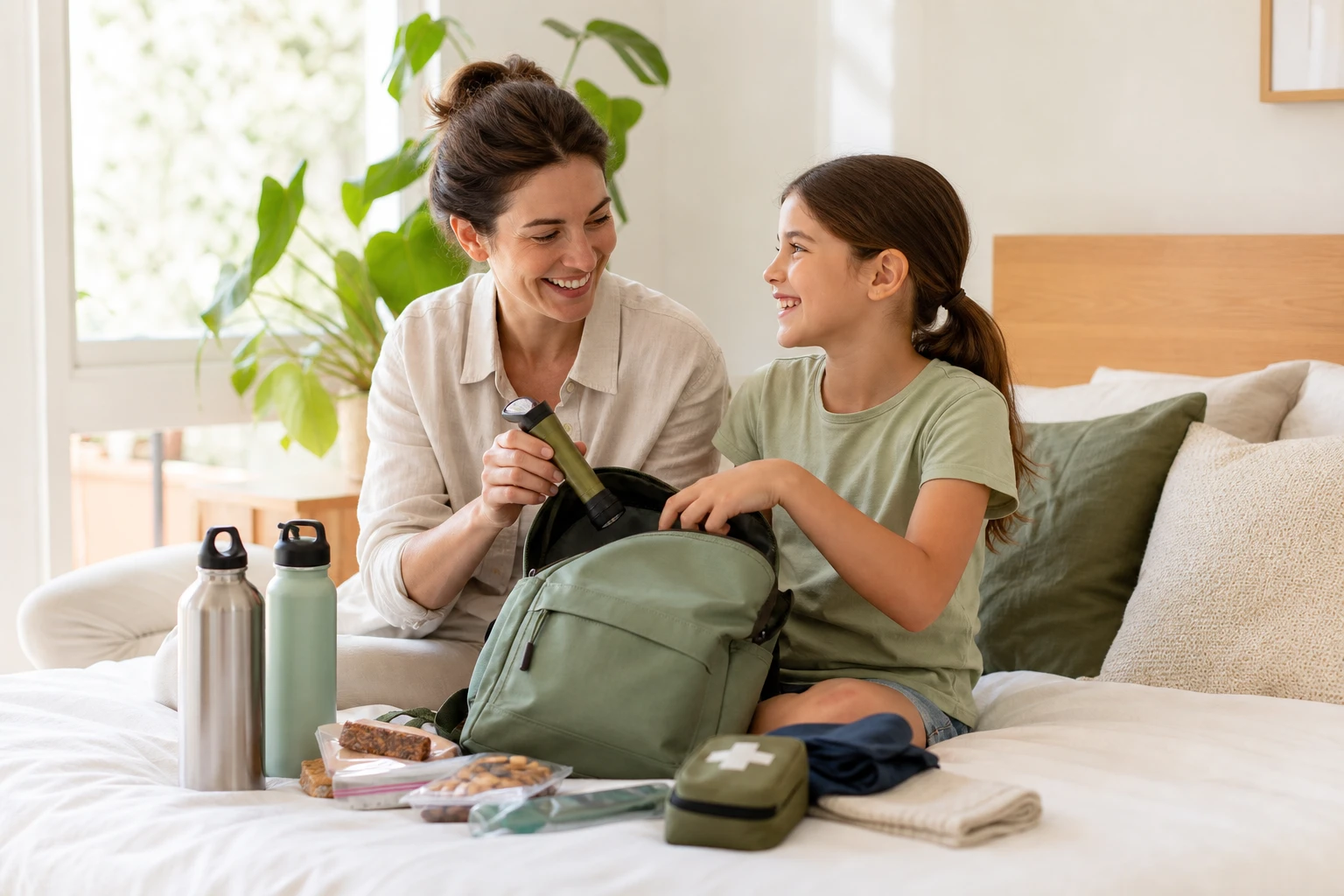
A 72-hour kit (go-bag, bug-out bag, whatever your family calls it) answers one question: if you had to leave your home in ten minutes, or lose power and water for three days, what's in your hands?
The prepackaged kits sold online answer it badly: a cheap flashlight, 400-calorie food bars nobody can eat three days of, and a foil blanket, for $90. You can build dramatically better for the same money, and most of it is already in your house.
The checklist
Water and food
- Water: 1 gallon per person per day, 3 days' worth (or bottles plus a compact filter)
- 3 days of no-cook food: protein bars, peanut butter, nuts, dried fruit, canned goods with pull tabs
- Manual can opener if any cans lack pull tabs
Light, power, information
- Flashlight or headlamp per person, plus spare batteries
- Battery or hand-crank radio (NOAA weather band is the feature that matters)
- Phone chargers and a charged power bank
Health and safety
- First aid kit
- Prescription medications: a 7-day buffer is the goal, and the hardest item on this list to get; start asking your pharmacy now
- Spare glasses or contacts
- Dust masks, moist towelettes, hand sanitizer, trash bags
- Whistle (three blasts is the universal distress signal)
Documents and money
- Copies of IDs, insurance policies, and key contacts in a waterproof pouch
- Cash in small bills; card readers die with the power
Tools and comfort
- Multi-tool or wrench and pliers (for shutting off utilities)
- Local paper maps
- A change of clothes and sturdy shoes per person
- Emergency blanket, compact sleeping bag if space allows
Per-person additions: infant formula and diapers, pet food and a leash, kids' comfort item and a deck of cards, any medical equipment.
Five details that separate a real kit from a checklist
- Use a backpack per adult, not one giant duffel. You may be carrying it.
- Store it where you leave, by the main door or in the car, not buried in the attic.
- Rotate it twice a year. Food expires, kids' clothes stop fitting, batteries drain. A calendar reminder on the solstices works.
- Water is the weight problem. Three gallons per person is 25 pounds; a filter plus bottles is the realistic answer for anyone who can't carry that.
- Walk your exits once. A kit you've never picked up in a drill is a theory, not a plan.
Your kit is a slice of your bigger picture
The 72-hour kit is the sprint version of preparedness. The full picture is your home supply: the 2-week food list and water storage that carry you through longer disruptions.
Provision Planner tracks both. Log your go-bag as its own storage location and your pantry as another, and it tells you what's expiring in each, what's missing, and how many days your household covers, at home or on the move.
You did the reading. Now get your number.
Provision Planner does this article's math for your real household, automatically, and keeps it current as supplies come and go.