Readiness
Emergency Preparedness in an Apartment: The Small-Space Guide
June 10, 2026 · 2min read · Reviewed against FEMA & CDC guidance
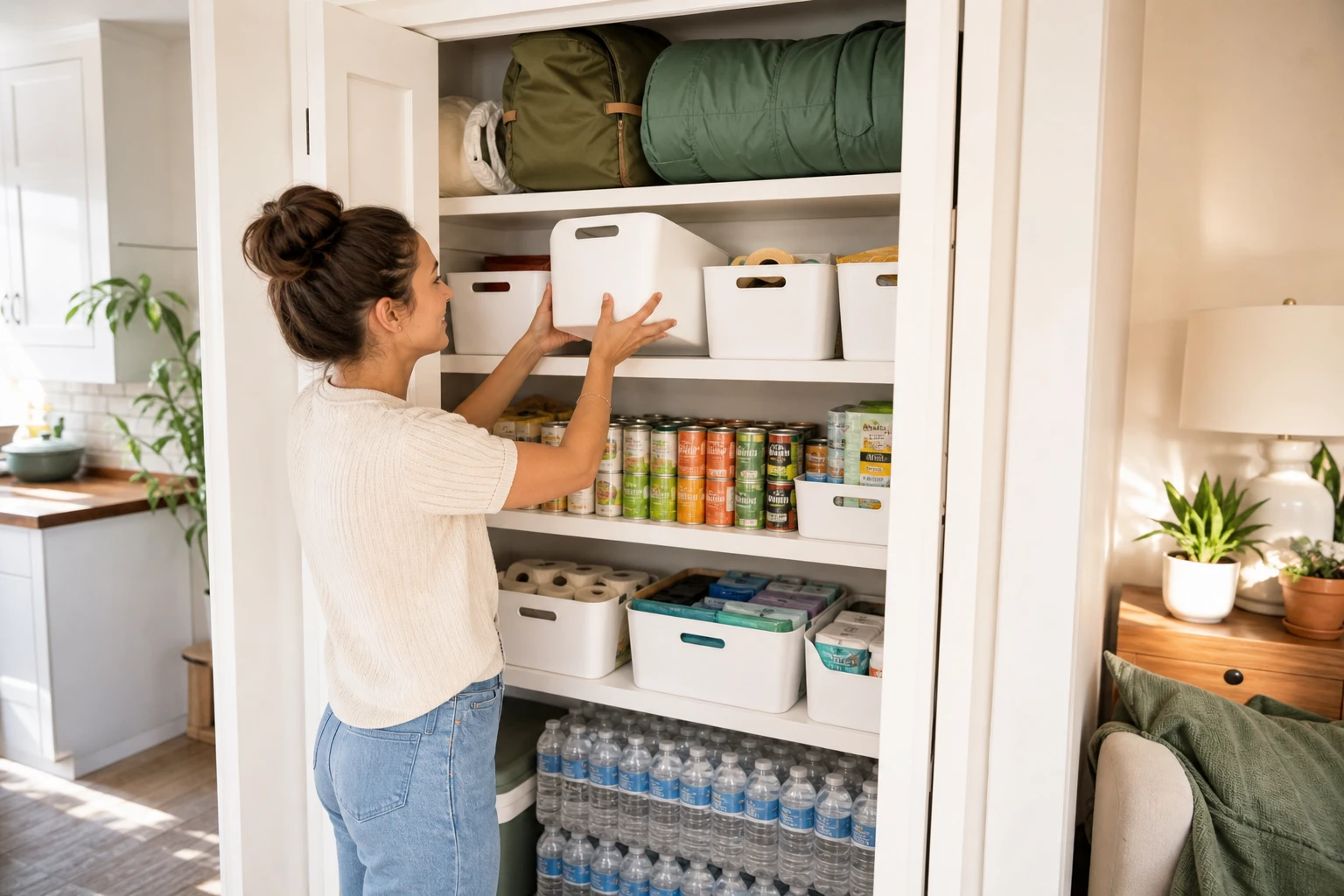
Preparedness content assumes you have a basement, a garage, and a yard for the generator. Most of it is useless to the millions of households in 800 square feet. Here's the apartment version, built around the two real constraints: space and building rules.
Where two weeks of supplies fit in an apartment
The standard two-week target for two people is roughly 56,000 calories and 28 gallons of water. In apartment terms that's about two closet shelves and one under-bed zone:
- Under the bed: flat cases of bottled water. Six cases slide under most bed frames, invisible.
- Closet floor: two or three stackable bins of canned and dry food. Date them and rotate through normal cooking.
- The vertical trick: one shelf-per-doorway using an over-door organizer or a single tall shelf unit turns dead space into the pantry your kitchen doesn't have.
- Skip the 55-gallon barrel. Water weighs 8.3 pounds per gallon, and a filled barrel is a structural conversation with your landlord. Many smaller containers beat one huge one in every apartment scenario.
What replaces the generator
You can't run a generator on a balcony (carbon monoxide doesn't care that it's outside-ish, and your lease bans it anyway). The apartment power stack:
- A big power bank or two for phones and lights, recharged from the car if needed
- Battery lanterns and headlamps (candles and open flame are how apartment fires start)
- A battery or hand-crank radio for information
- No-cook food planned deliberately: your two weeks should be eatable cold, because indoor camp stoves are a hard no. A single-burner butane stove used by a window is the one cautious exception many fire departments tolerate; know your building's rules.
Renter-specific realities
- Know your building's water situation. High-rises need electric pumps; no power can mean no tap pressure above the third floor. Your stored water matters more, not less, than a homeowner's.
- Evacuation is more likely for you. Apartment dwellers evacuate for building issues (fire alarms, gas leaks, pipe bursts) far more often than homeowners. The 72-hour go-bag is not optional equipment; it's your most-used prep.
- Renter's insurance and photos: photograph every room now; it's a ten-minute task that pays for itself in one claim.
- Meet the neighbors. In a building, your community plan IS the hallway. Two friendly doors beat a hundred pounds of gear.
Small space, sharper inventory
Apartment prep has no room for duplicates or mystery bins; every shelf-inch has to count. That's exactly the situation Provision Planner was built for: scan supplies in, assign them to locations ("closet bin 2," "under bed"), and see precisely how many days two closet shelves actually buy your household, plus what's expiring and what to add next. Small spaces run on knowing, not stockpiling.
You did the reading. Now get your number.
Provision Planner does this article's math for your real household, automatically, and keeps it current as supplies come and go.