Water
Emergency Water Purification: Boiling, Bleach, and Filters Compared
June 3, 2026 · 2min read · Reviewed against FEMA & CDC guidance
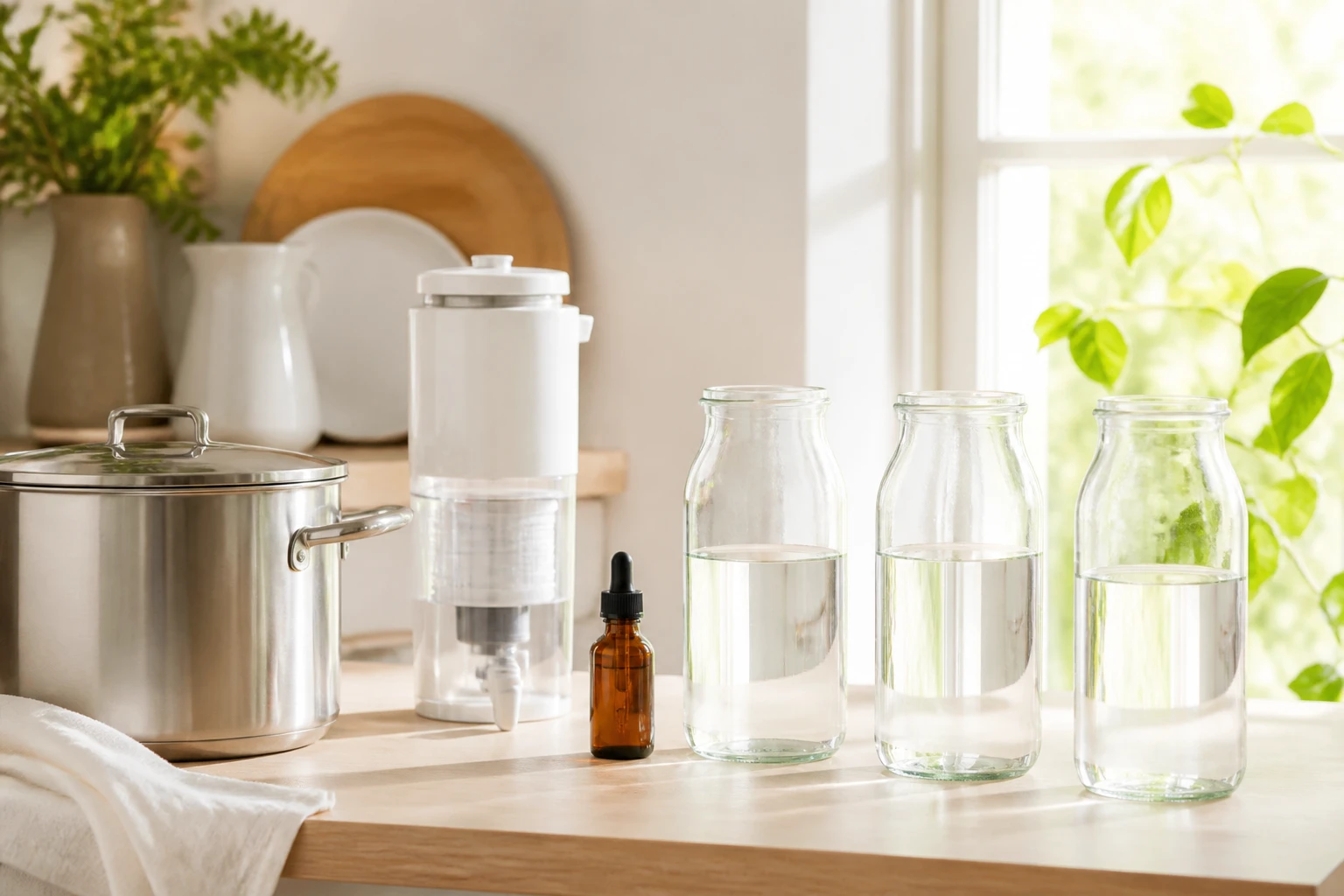
Stored water is Plan A, and it runs out. Purification is Plan B, and it's mostly chemistry simple enough to write on an index card, which is exactly what you should do with this article. Here are the three methods that matter, what each one handles, and the mistakes that make them fail.
Method 1: boiling (the gold standard)
A rolling boil for 1 minute kills bacteria, viruses, and parasites. At elevations above 6,500 feet, make it 3 minutes (water boils cooler up there).
- Cloudy water first gets filtered through a coffee filter, paper towel, or clean cloth; boiling kills germs but doesn't remove dirt.
- Boiled water tastes flat. Pour it between two containers a few times and it recovers.
- What boiling can't fix: chemical contamination (fuel, pesticides). No home method handles that; that's when you rely on stored water only.
Method 2: plain household bleach
Regular unscented bleach (6% sodium hypochlorite, the standard bottle) purifies water at:
| Water | Bleach per gallon |
|---|---|
| Clear | 8 drops (1/8 teaspoon) |
| Cloudy (after straining) | 16 drops (1/4 teaspoon) |
Stir, wait 30 minutes, then smell: a faint chlorine scent means it worked. No scent, repeat the dose and wait again. Two must-knows: never use scented, splashless, or "advanced" bleach (additives are not for drinking), and bleach itself weakens on the shelf, so rotate the bottle yearly.
Method 3: filters
A quality portable filter (the backpacking kind) removes bacteria and parasites and is the fastest option for larger volumes. The fine print matters: most filters do not remove viruses, which is usually acceptable for US tap-system failures but is why filter-then-boil is the belt-and-suspenders play when the source is truly unknown. Filters also clog on silty water, so pre-strain, and a spare cartridge belongs in the kit.
Purification tablets earn a mention as the glove-box and go-bag option: light, cheap, 30-minute wait, mild pool taste, perfectly effective.
Don't forget the water you already have
Before purifying anything questionable, remember the clean sources already in the house: the water heater (30 to 50 gallons), ice in the freezer, and the toilet tank (not bowl) if it's chemical-free. The full inventory of hidden water, plus how much to store so Plan B stays theoretical, is in how much water to store.
Plan A deserves a number
Every method above is a fallback for the same root cause: not quite enough stored water. Provision Planner keeps Plan A measured: log your bottles and jugs, and your dashboard shows exactly how many days of water your household holds, when refill-cycle containers are due, and what to buy to reach the two-week mark. Purification is a great skill; a full shelf means you'll probably never use it.
You did the reading. Now get your number.
Provision Planner does this article's math for your real household, automatically, and keeps it current as supplies come and go.