Readiness
The Beginner Prepper Checklist: Your First 30 Days
June 21, 2026 · 2min read · Reviewed against FEMA & CDC guidance
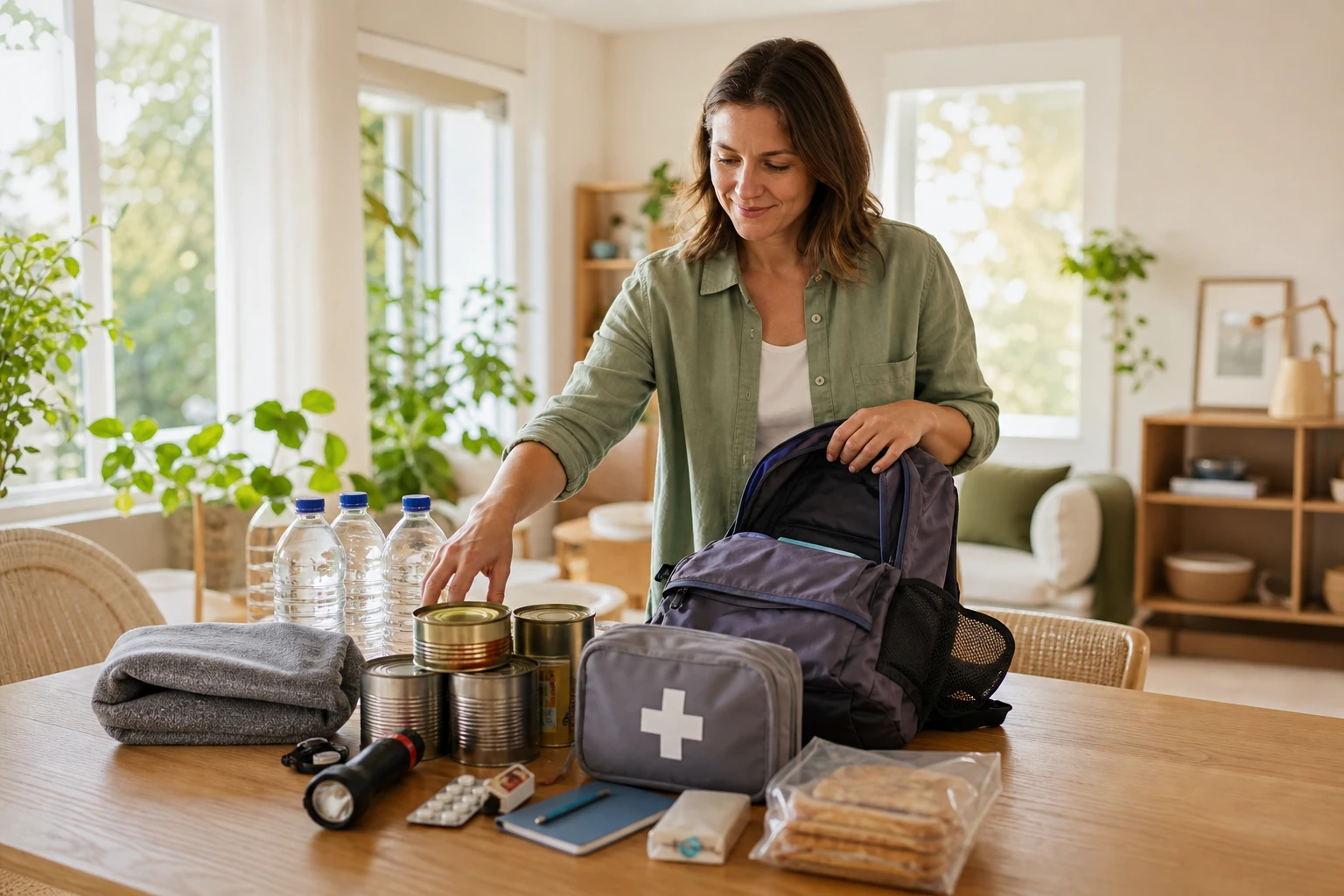
Most people find prepping through a bad week: an outage that lasted longer than the flashlight batteries, a storm that emptied the stores, a headline that wouldn't quiet down. Then they hit the prepper internet, which tells them to buy a bunker.
Ignore that. Real household readiness is about four boring, achievable things: water, food, power, and paper. Here's the 30-day version, ordered so each week buys the most protection available for the money.
Week 1: water and light (about $40)
- Buy 1 gallon of water per person per day for 3 days, plus a case of bottles
- A flashlight or headlamp per person, plus spare batteries
- A manual can opener
- Check what's already true: where your water heater is (30 to 50 gallons of hidden emergency water) and what's actually in your pantry
Water first, always. You can improvise calories for a week; you can't improvise water. The full math is in how much water to store.
Week 2: two weeks of food (about $50 to $100)
Work from the 2-week emergency food supply list: rice, oats, pasta, canned proteins, canned vegetables, oil, and comfort food. Buy what your family already eats, and start the habit that makes all of this sustainable: eat and replace. Oldest to the front, new to the back.
Week 3: power, heat, and information (about $60)
- A battery or hand-crank radio with NOAA weather band
- Power banks, charged, plus cables
- A safe way to cook without electricity: camp stove or grill, fuel stored outside
- If you heat with electricity: blankets, sleeping bags, and a plan for one warm room
Week 4: paper, cash, and the plan (about $20)
- Copies of IDs, insurance, and key contacts in a waterproof pouch
- Cash in small bills (card readers die with the power)
- A family emergency plan: one out-of-area contact, one meeting place
- Prescription buffer: ask your pharmacy about an extra week of anything essential
After day 30: three upgrades in order
- A go-bag per person for evacuations: the 72-hour kit checklist
- Stretch food and water toward one month, then further if your risks warrant it
- Learn your local scenario (hurricane, earthquake, winter storm) and do its specific prep
The step most beginners skip
Nobody tells you this: the hard part isn't buying supplies, it's knowing where you stand. Am I covered for four days or eleven? What expired? What did we eat and never replace?
That's the job Provision Planner does. Set up your household, scan your supplies in as you buy them through the 30 days, and watch your coverage number climb week by week. Preparedness stops being a vibe and becomes a number you can point at.
You did the reading. Now get your number.
Provision Planner does this article's math for your real household, automatically, and keeps it current as supplies come and go.